Watchtower
Time
1 Quarter
Time
1 Quarter
Role
Senior Product Designer
Role
Senior Product Designer
Service
Product Design
Service
Product Design
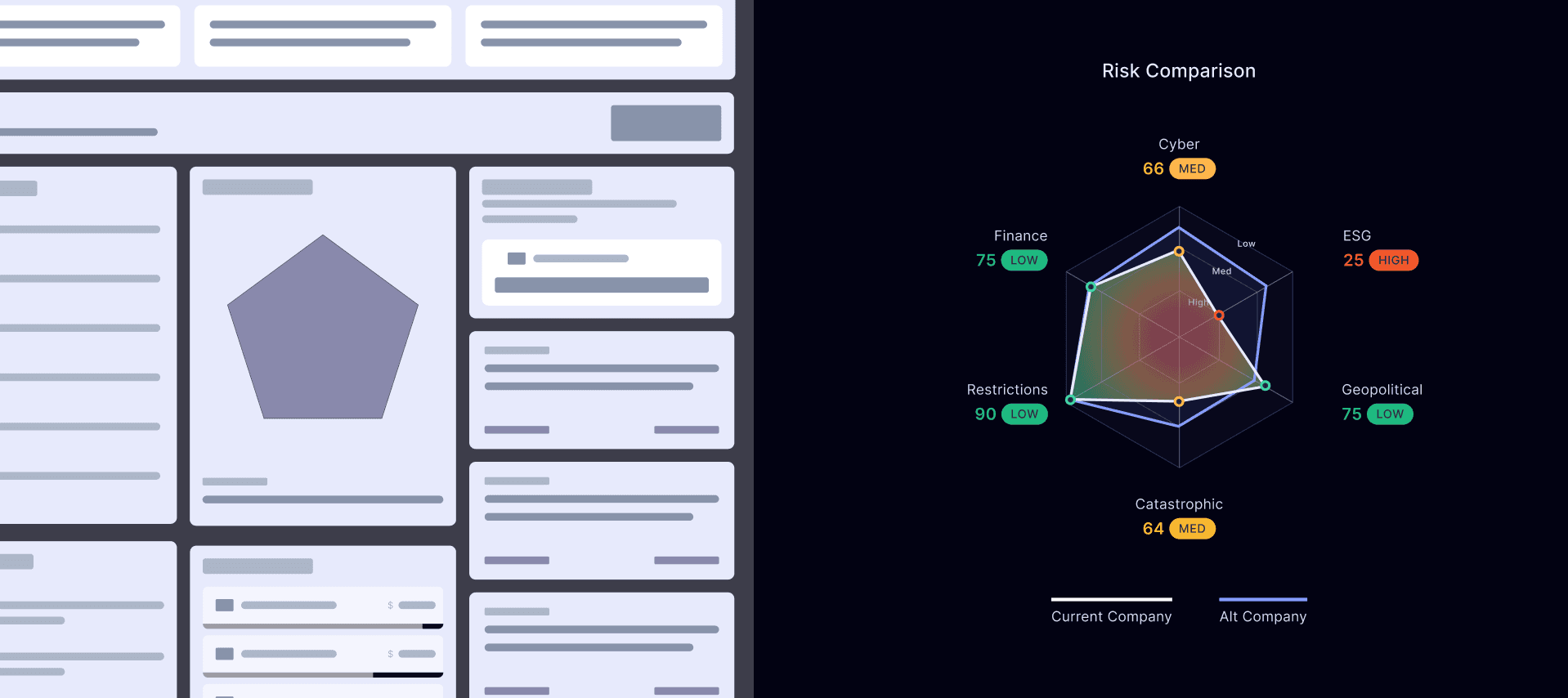
Supply chain analyst wanted a way to quickly navigate any changes they defined to be alarming and be able to understand how great the impact was on their supply chain. With a quick delivery time, our node UI was built to be flexiable enough to create any alert for power users but also welcoming to new users.
Background & Goal
Background & Goal
The Subject Matter Analyst is responsible for conducting assessments to identify supply chain risk, usually when events arise. This would be difficult for our users since most data sets are too large and overwhelming to have an easy starting point. Even if users were able to determine what had change in their supplier data, they would still have to conduct further research to see if the change/event was of any serious risk.
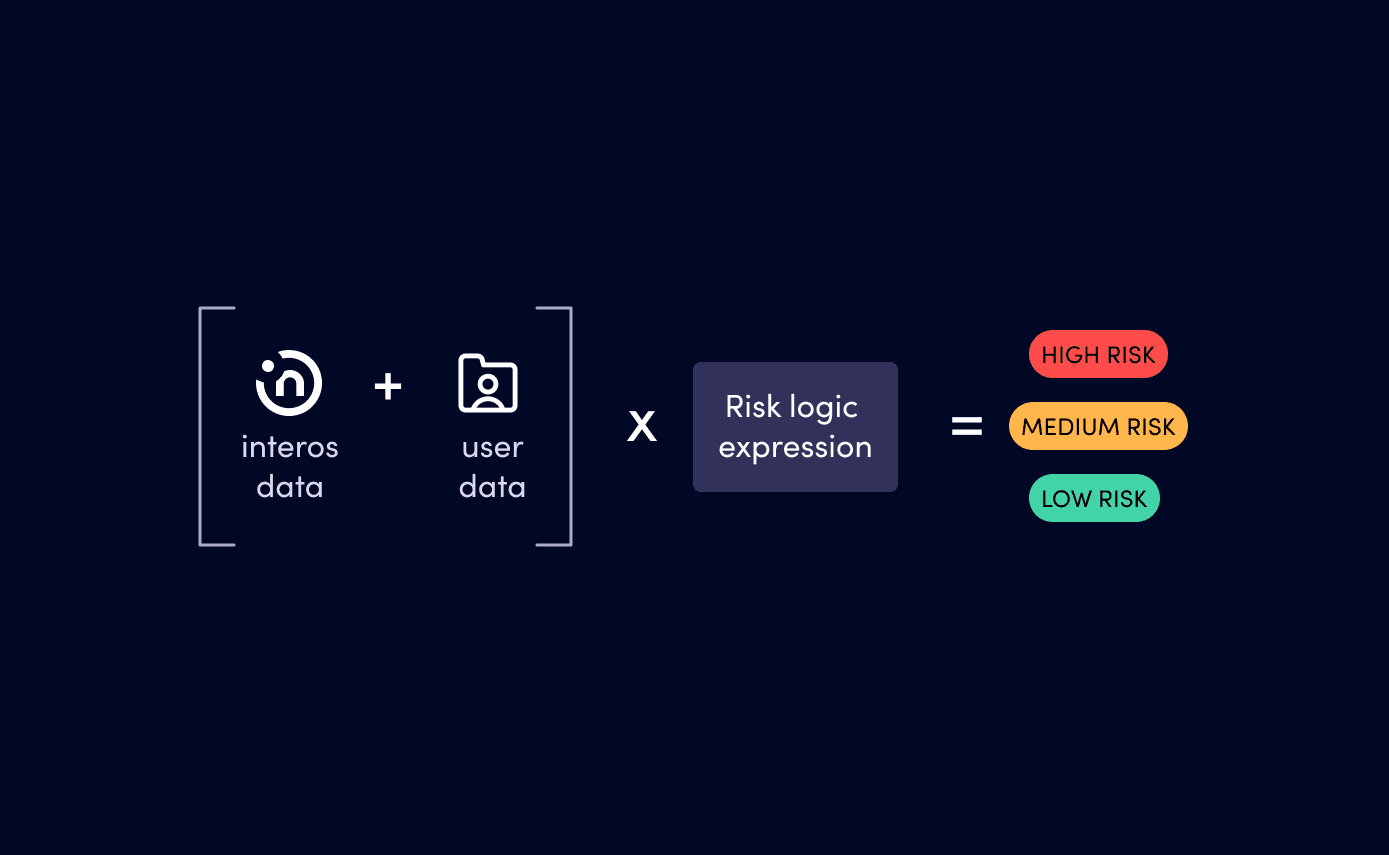
Our goal was to allow users to create dynamic scenarios based on prebuilt API expressions. With the help of interos's watchtower, users could create any risk logic expression and have changes in supplier data alert and communicate the risk of the event/change in value.
The Subject Matter Analyst is responsible for conducting assessments to identify supply chain risk, usually when events arise. This would be difficult for our users since most data sets are too large and overwhelming to have an easy starting point. Even if users were able to determine what had change in their supplier data, they would still have to conduct further research to see if the change/event was of any serious risk.
Our goal was to allow users to create dynamic scenarios based on prebuilt API expressions. With the help of interos's watchtower, users could create any risk logic expression and have changes in supplier data alert and communicate the risk of the event/change in value.
Initial Feedback
Initial Feedback
During customer ideations with we talked through what a successful UI would require. We started early comps using our summarized persona and keeping in mind that they will be conducting assessments of company risk, usually when events arise. We considering all the data types that needed to be supported (int, deci, string, etc) and the possible expression types (algorithmic, boolean, if & then, etc), we showed some wireframes using common risk logic for testing.
We quickly discovered that the most challenging part of this feature would be designing a UI that could translate complex expressions into a readable format for analyst.
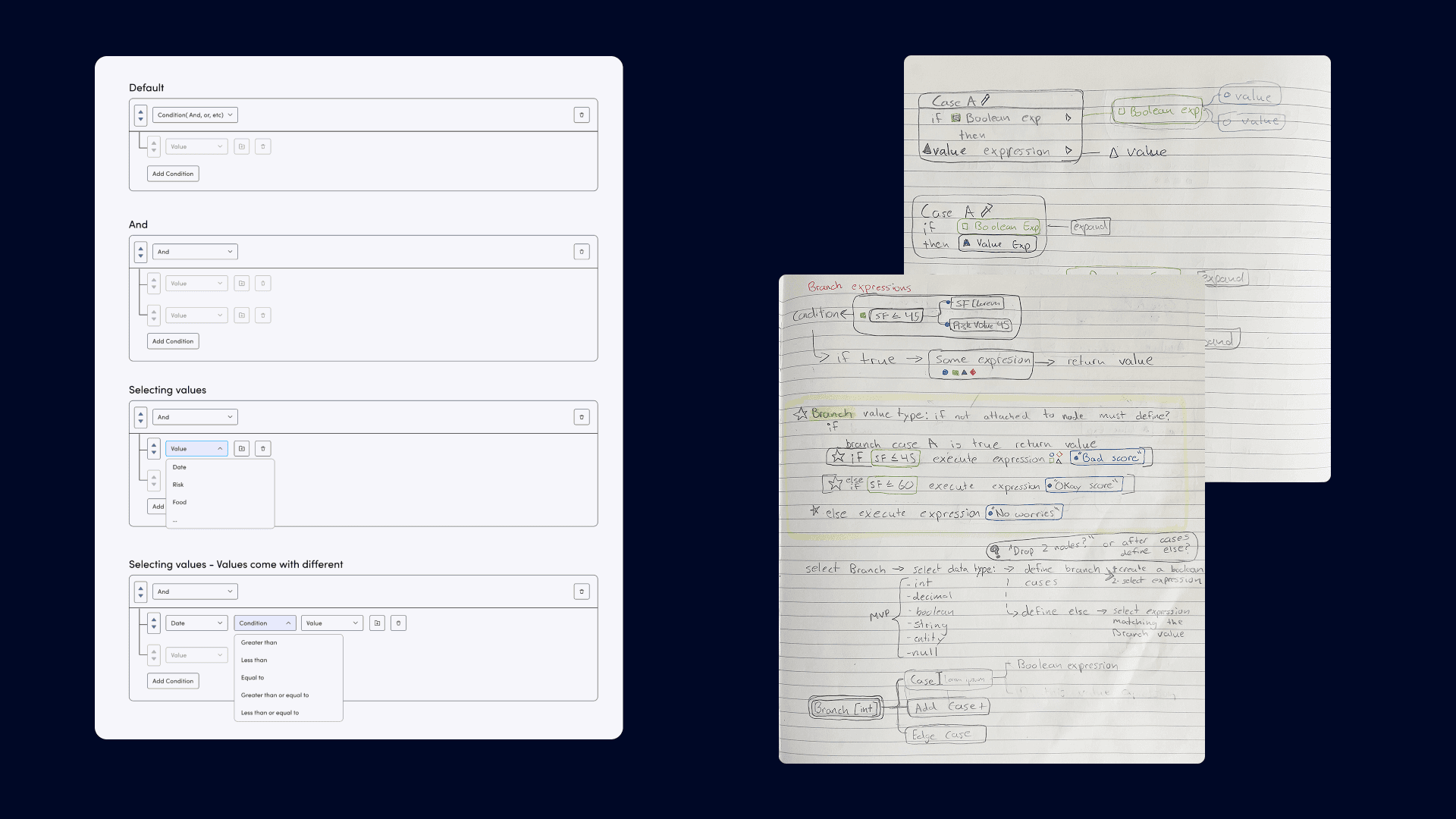
During customer ideations with we talked through what a successful UI would require. We started early comps using our summarized persona and keeping in mind that they will be conducting assessments of company risk, usually when events arise. We considering all the data types that needed to be supported (int, deci, string, etc) and the possible expression types (algorithmic, boolean, if & then, etc), we showed some wireframes using common risk logic for testing.
We quickly discovered that the most challenging part of this feature would be designing a UI that could translate complex expressions into a readable format for analyst.
UI Solution
UI Solution
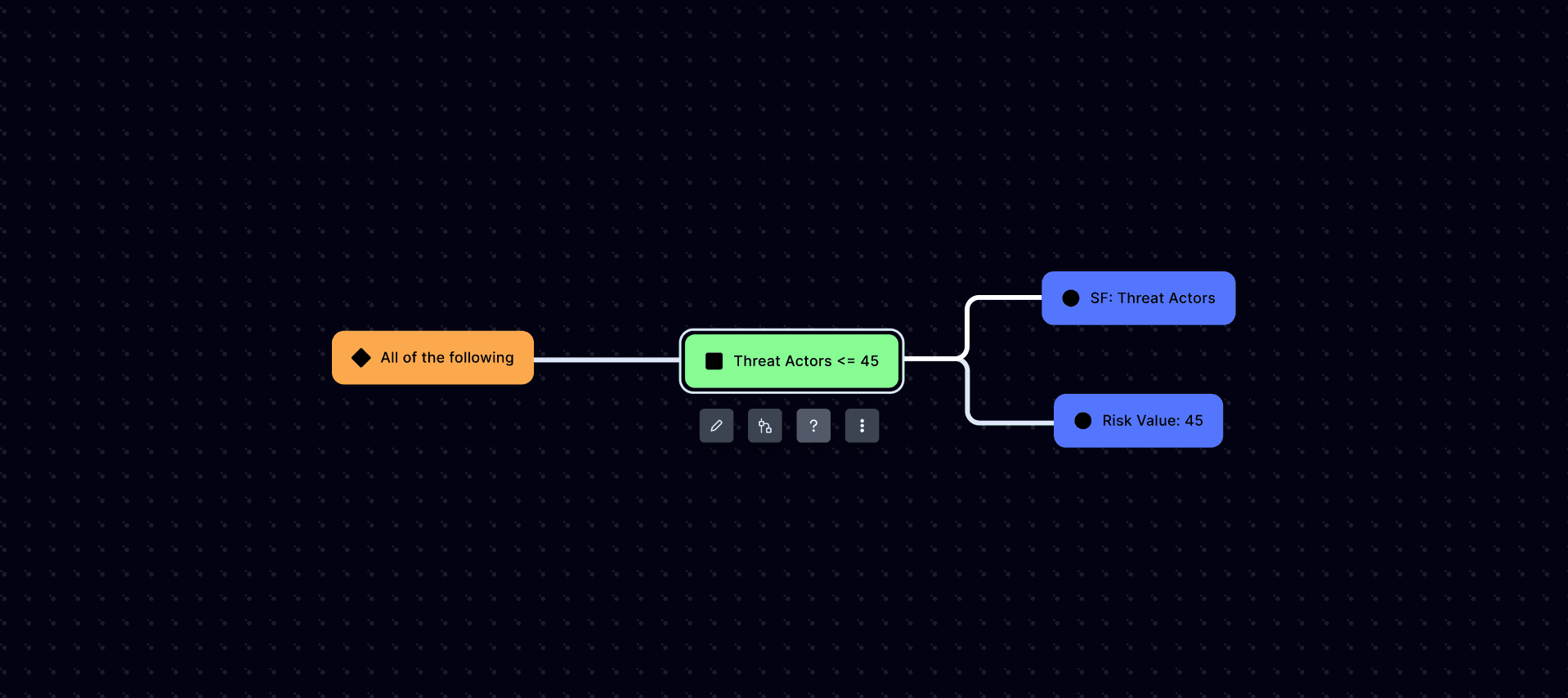
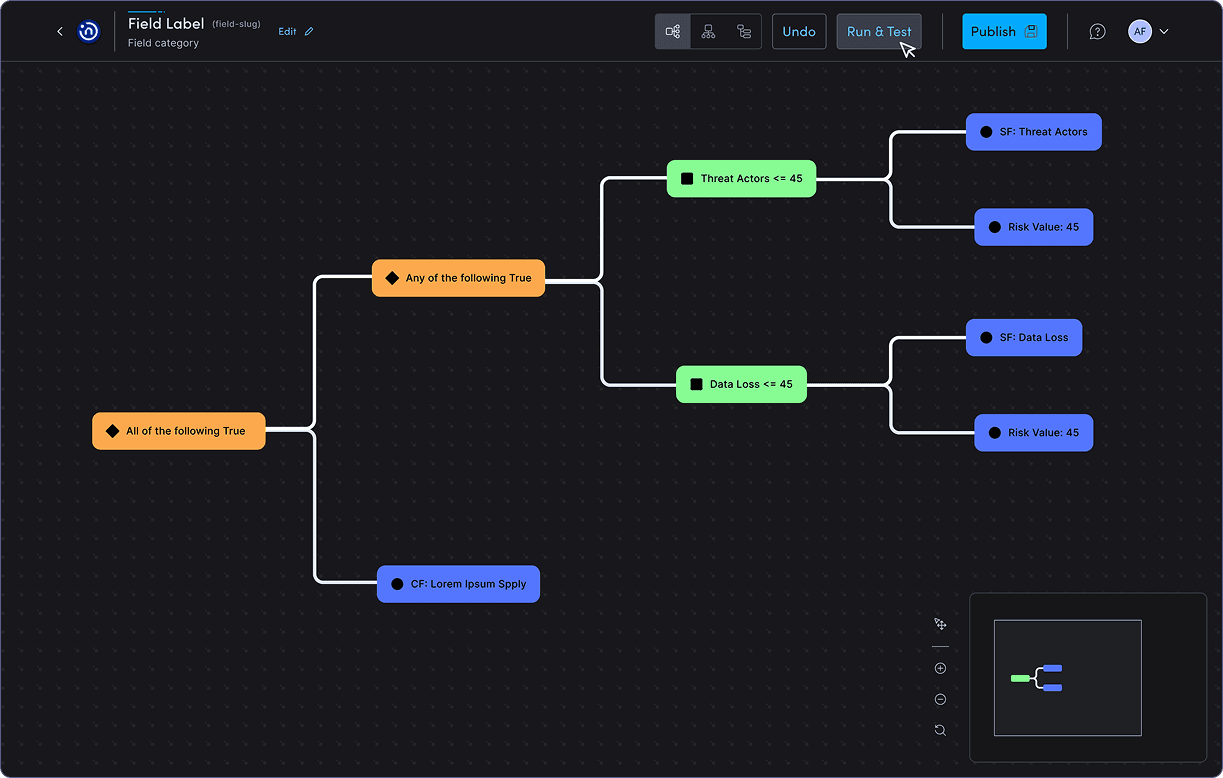
After testing and feedback with users, we designed a solution using a node UI pattern. The nodes used color and shapes to bucket data types together and allowed for users to quickly scan the screen to see what was going in and out of their risk expression. Since this was still a new experience for most users the UI had to be forgiving and teach users when they hit any frustrations. We blocked any data types that couldn't link together but also gave alternative paths for users to continue exploring if they chose to.
After testing and feedback with users, we designed a solution using a node UI pattern. The nodes used color and shapes to bucket data types together and allowed for users to quickly scan the screen to see what was going in and out of their risk expression. Since this was still a new experience for most users the UI had to be forgiving and teach users when they hit any frustrations. We blocked any data types that couldn't link together but also gave alternative paths for users to continue exploring if they chose to.
And More...
And More...
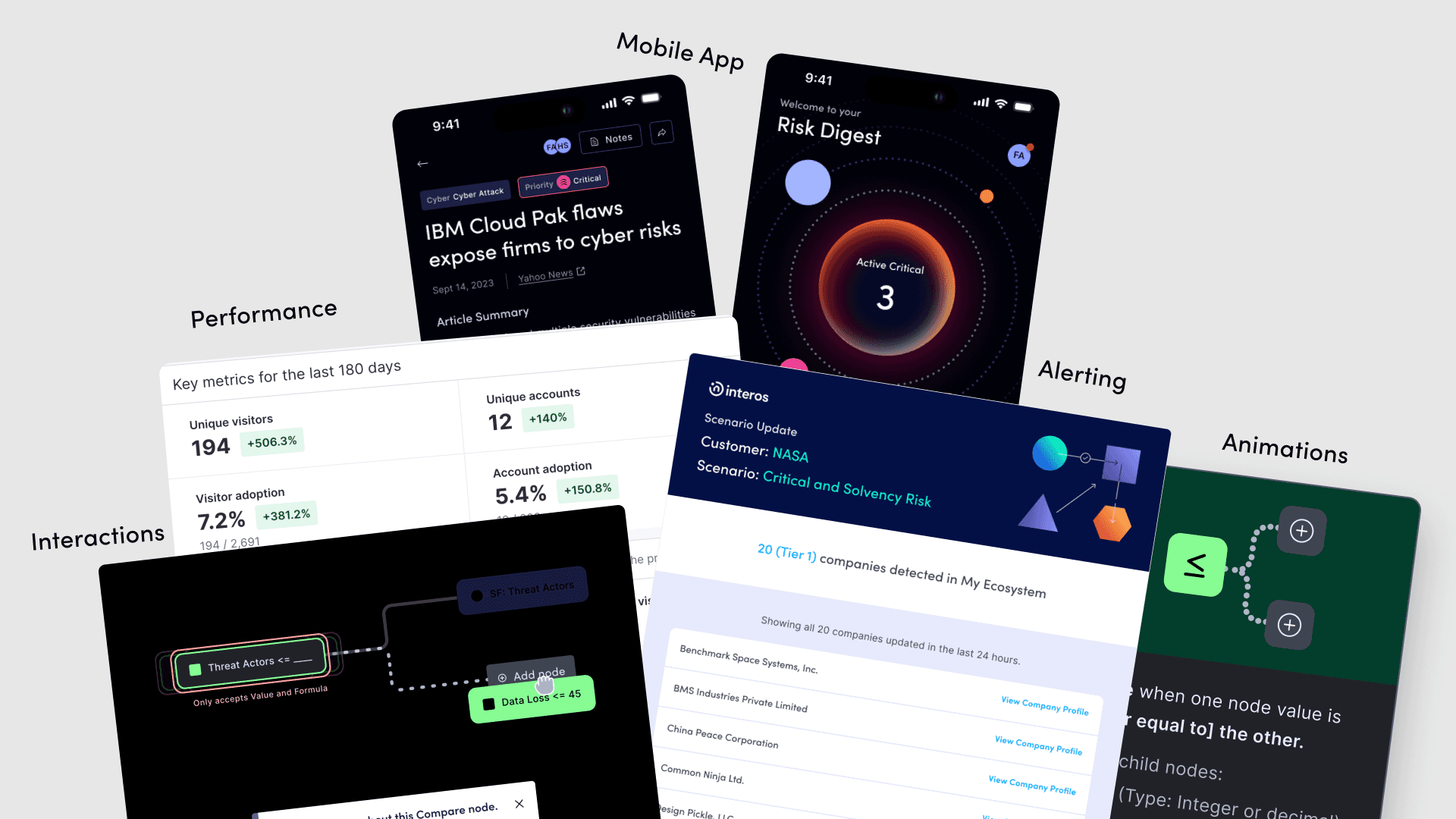
Curious about this case study? Lets chat and if you want more details on design decisions, detailed outcomes, the mobile follow up, dev communication and more.
Curious about this case study? Lets chat and if you want more details on design decisions, detailed outcomes, the mobile follow up, dev communication and more.